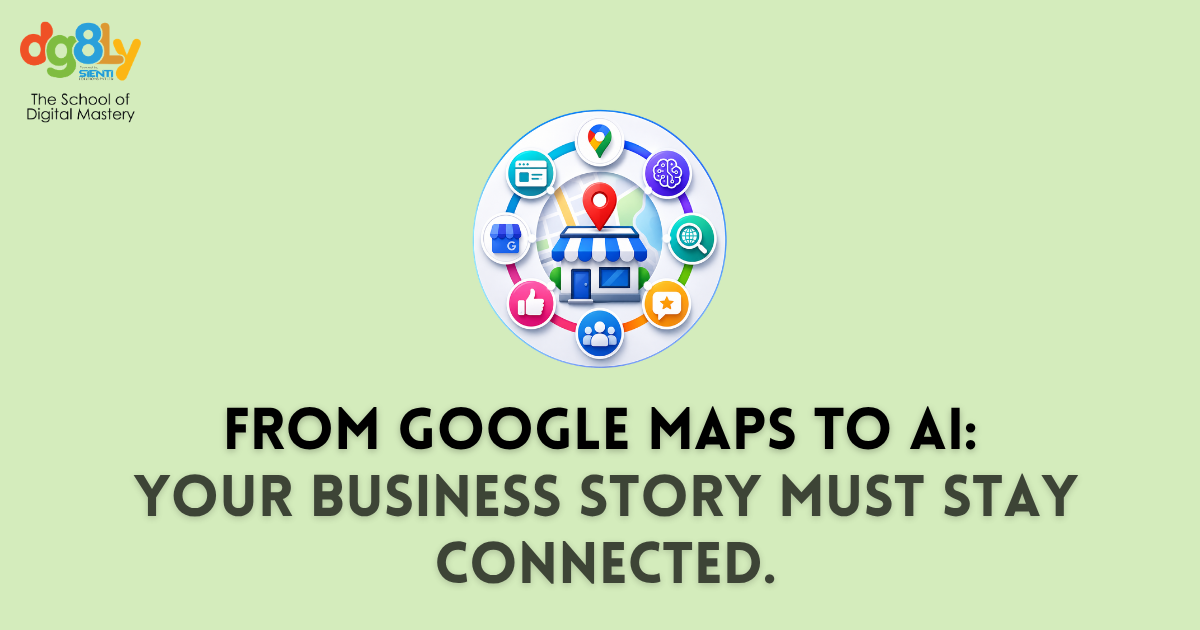
From Google Maps to AI Search: Why Your Business Information Ecosystem Matters More Than Ever
Introduction
Imagine a potential customer searching for your business online.
They may search for your business name on Google, look for directions on Google Maps, visit your website, read customer reviews, check your social media pages, or ask an AI-powered search tool for recommendations.
Now imagine what happens if your business information is different on each platform.
Your website shows one phone number. Google Maps displays an old address. Facebook has outdated business hours. An online directory lists a different website.
This creates confusion, not just for customers, but potentially for search systems trying to understand which information is correct.
That is why businesses today need to think beyond simply having a website or creating a Google Business Profile. What matters increasingly is your business information ecosystem: the network of digital platforms and information sources that collectively represent your business online.
Google itself explains that information displayed in Business Profiles and local search can come from multiple sources, including a business's official website, third-party data, user contributions, and information provided by business owners.
In the age of Google Maps and AI-powered search experiences, maintaining a clear, accurate, and consistent digital presence has become more important than ever.
What Is a Business Information Ecosystem?
A business information ecosystem is the complete network of places where information about your business exists online.
This may include:
Your official website
Google Business Profile
Google Maps
Social media profiles
Online business directories
Industry-specific platforms
Review websites
Local listings
News articles and PR mentions
Customer reviews
Product and service pages
Structured data on your website
Think of your business ecosystem as a digital identity.
Every platform may contain pieces of information such as:
Business name
Address
Phone number
Website
Business category
Opening hours
Products and services
Photos and videos
Customer reviews
Prices or service information
The goal is not necessarily to be present on every website on the internet. Instead, businesses should focus on maintaining accurate information across the platforms that genuinely matter to their customers and industry.
The Journey Has Changed: From Searching to Asking
Traditional search often looked like this:
Customer searches → Google shows results → Customer clicks a website
Today, the journey can be much more complex.
A customer might search:
“Best digital marketing agency near me”
Or they might ask an AI-powered search experience:
“Which digital marketing agency would be suitable for a small business in Kochi?”
The second type of search is more conversational and specific.
Instead of simply looking for one keyword, users may ask questions, compare options, look for recommendations, and seek detailed information.
This means your business needs to be understandable across different information sources.
Google's current guidance for generative AI features explains that traditional SEO best practices still matter because its AI search features rely on core Search ranking and quality systems to retrieve relevant information. Google also notes that business information from tools such as Google Business Profiles can help products and services become visible in AI responses and other Search experiences.
In simple words:
AI search does not eliminate the need for strong business information. It makes trustworthy and understandable information even more valuable.
Why Google Maps Is Still a Major Part of the Ecosystem
For local businesses, Google Maps is often one of the first places where customers discover important business details.
A person searching for:
Restaurants near me
Best life coach in Kochi
Digital marketing agency near me
Plumber in Kakkanad
Interior designer in Kochi
may encounter business information directly through Google Search and Maps.
A Google Business Profile allows businesses to manage details such as contact information, operating hours, photos, services, reviews, and updates.
However, your Google Business Profile should not be treated as an isolated marketing channel.
It should work together with your:
Website + business information + reviews + content + wider online presence.
Google specifically states that business information can be sourced from publicly available web content, licensed third-party data, user contributions, and information supplied by business owners.
This is one reason why maintaining your information ecosystem matters.
The Problem With Inconsistent Business Information
Let us take a simple example.
Imagine that a business has:
Website:
ABC Digital
Phone: 98765 43210
Address: Kakkanad
Google Business Profile:
ABC Digital Marketing
Phone: 91234 56789
Address: Edappally
Facebook:
ABC Digital Solutions
Old business hours
A potential customer may immediately become confused.
Which location is correct?
Which number should they call?
Are these three different businesses?
Even if the business has simply moved or rebranded, outdated information can create unnecessary friction for customers.
Google recommends keeping Business Profile information correct, complete, and up to date to support visibility in local search.
Therefore, whenever important information changes, businesses should review their wider digital ecosystem,not just one profile.
The Foundation: NAP Consistency
One of the most important concepts in local SEO is NAP consistency.
NAP stands for:
Name
Address
Phone number
For example:
Business Name: ABC Digital Marketing
Address: Kakkanad, Kochi, Kerala
Phone: +91 XXXXX XXXXX
These important details should be accurate across the major platforms where your business is listed.
This does not mean every description or sentence needs to be identical.
For example, your Google Business Profile description, website content, and social media bio can be written differently.
What matters is that essential factual information remains correct.
A business that changes its location, phone number, operating hours, or website should review all important digital touchpoints.
Your Website Is the Central Source of Truth
Your website should act as one of the strongest sources of information about your business.
A good business website should clearly communicate:
Who are you?
Explain your business, brand, and expertise.
What do you offer?
Create clear pages for your products or services.
Where do you operate?
Mention your physical location or service areas where appropriate.
How can customers contact you?
Display accurate contact details.
Why should customers trust you?
Show experience, testimonials, case studies, credentials, reviews, or other relevant evidence.
Google Search Central recommends establishing key business details through your official website, Business Profile, and other supported methods. It also recommends structured data as a way to provide explicit information about the meaning of content on your pages.
For local businesses, Google supports LocalBusiness structured data, which can help communicate relevant details about a business to search engines.
What Is Structured Data and Why Should Beginners Care?
Structured data may sound technical, but the basic idea is simple.
It helps search engines understand specific information on a webpage in a more structured format.
For example, structured data can communicate details such as:
Business name
Business type
Address
Opening hours
Logo
Products
Events
Reviews, where applicable
Other relevant business information
You can think of it as adding clear labels to important information.
Instead of making search engines interpret everything only from ordinary text, structured data can provide additional context.
However, structured data is not a magic ranking button.
Its main purpose is to help search engines better understand the content and information you provide.
Google explains that structured data provides explicit clues about the meaning of a page and supports various Search features, including local business information.
AI Search Makes Context More Important
In the past, some businesses focused heavily on adding a keyword everywhere.
For example:
Best digital marketing agency in Kochi.
Best digital marketing agency in Kochi.
Best digital marketing agency in Kochi.
But modern search is not simply about repeating the same keyword.
Search systems need to understand:
What your business does
Who you serve
Where you operate
What services you provide
What makes you different
Whether the information is useful and trustworthy
For example, instead of only targeting:
“Digital marketing agency Kochi”
your website could clearly explain:
SEO services
Google Business Profile optimisation
Social media marketing
Local SEO
Industries you work with
Locations you serve
Case studies and real examples
Team expertise
This gives search engines and users more context.
Google's AI-search guidance continues to emphasise helpful content and core SEO fundamentals rather than treating AI optimisation as a completely separate activity.
Reviews Are Also Part of Your Information Ecosystem
Reviews are more than star ratings.
They contribute to how potential customers understand your business.
A review might mention:
The service received
A product purchased
The location
Customer experience
Staff behaviour
Specific expertise
For example:
“I received excellent local SEO support for my business in Kochi.”
This provides more context than simply writing:
“Good service.”
Businesses should encourage genuine customers to leave honest reviews and should respond professionally.
Google's Business Profile platform highlights reviews as a way for businesses to build trust and engage with customers.
The key word here is genuine.
Artificial or manipulative reviews may create policy and trust issues. Google continues to invest heavily in systems designed to detect inaccurate information, fake profiles, and policy-violating reviews.
Your Social Media Profiles Should Support Your Business Identity
Social media may not replace your website or Google Business Profile, but it can strengthen your overall online presence.
Your social profiles should make it easy for people to understand:
Who you are
What you do
Where you operate
How to contact you
Where to find your official website
For example, if your business has changed its phone number, update it across your important social media profiles.
If you have rebranded, update:
Profile names
Website links
Business descriptions
Logos
Contact information
The goal is to reduce confusion.
Your digital presence should tell one clear story about your business.
A Simple Example of a Healthy Information Ecosystem
Let us imagine a local bakery in Kochi.
Google Business Profile
The profile contains:
Correct business name
Accurate location
Current opening hours
Phone number
Website
Photos
Products or services
Genuine customer reviews
Website
The website includes:
About page
Menu or product pages
Contact information
Location details
Ordering information
Frequently asked questions
Social Media
The bakery's social profiles include:
Current branding
Correct website link
Updated contact information
Product updates
Customer engagement
Other Relevant Listings
Industry directories or local platforms contain accurate business information.
When these pieces work together, customers have a clearer experience.
That is what a business information ecosystem is all about.
Why Accuracy Matters More Than Ever
Business information is constantly changing.
A company may:
Move to a new location
Change its phone number
Launch new services
Change opening hours
Rebrand
Close a branch
Open a new branch
The problem is not always the change itself.
The problem occurs when the change is updated in only one place.
For example, updating your website but forgetting Google Maps could lead customers to the wrong location.
Google has also continued to invest in protecting the accuracy of Maps information. In 2026, Google announced additional measures, including proactive alerts intended to help verified and active business owners review certain important suggested edits before they go live.
The lesson for businesses is simple:
Your online information is not something you should update once and forget.
It requires regular monitoring.
How to Build a Strong Business Information Ecosystem
Here is a beginner-friendly process.
Step 1: Create a Business Information Master Sheet
Create a document containing your official:
Business name
Address
Phone number
Website
Opening hours
Primary category
Services
Social media links
Use this as your reference whenever you create or update a business profile.
Step 2: Audit Your Existing Online Presence
Search for your business name online.
Check:
Google Search
Google Maps
Your website
Social media
Major directories
Industry platforms
Look for outdated or incorrect information.
Step 3: Fix the Most Important Platforms First
Start with:
Your website
Google Business Profile
Google Maps presence
Major social media profiles
Important industry or local directories
You do not need to fix hundreds of websites in one day.
Start with the platforms that matter most to your customers.
Step 4: Keep Your Website Updated
Make sure your website clearly explains your:
Services
Business expertise
Location or service area
Contact information
Business identity
Add new information when your services or business changes.
Step 5: Use Structured Data Where Appropriate
If you have the technical resources, consider adding appropriate structured data to your website.
For local businesses, Local Business structured data may be relevant, depending on the type of website and business.
Always ensure that the structured information matches the visible information on your website.
Step 6: Build Helpful Content
Do not create content only to repeat keywords.
Create content that answers real customer questions.
For example, a digital marketing agency could publish:
What is local SEO?
How does Google Business Profile work?
Why are customer reviews important?
How can small businesses improve online visibility?
What should you check before hiring a digital marketing agency?
Helpful content can make it easier for both users and search systems to understand your expertise.
Step 7: Monitor and Maintain
Once your ecosystem is established, create a regular review process.
You can check your business information:
Every month
Every quarter
Whenever a major business change happens
Pay special attention to:
Address
Phone number
Business hours
Website links
Services
Brand name
Important listings
Common Mistakes Businesses Should Avoid
1. Treating Google Business Profile as the Entire SEO Strategy
A Business Profile is important, but it is only one part of your digital ecosystem.
Your website, content, reviews, and broader online presence also matter.
2. Using Outdated Information
An old phone number or address can directly affect customer experience.
3. Creating Duplicate or Confusing Business Identities
Different names across platforms can confuse customers.
Use your legitimate business identity consistently.
4. Keyword Stuffing
Repeating the same keyword unnaturally does not make your business more trustworthy.
Focus on clarity and usefulness.
5. Ignoring Your Website
Your website should clearly represent your official business information and expertise.
6. Forgetting About Reviews
Reviews are part of how customers evaluate your business. Encourage genuine feedback and respond professionally.
7. Updating Only One Platform
Whenever major business information changes, review your entire important online ecosystem.
The Future: One Business, Many Discovery Paths
The future of online discovery is not limited to ten blue links.
People may discover businesses through:
Traditional search
Google Maps
AI-powered search experiences
Voice search
Social media
Reviews
Recommendations
Product listings
Images and video
This means businesses should stop thinking:
“How do I rank on one platform?”
Instead, start thinking:
“How clearly and accurately does my business exist across the digital ecosystem?”
Google's documentation reflects this broader approach by connecting business information across Search, Knowledge Panels, Maps, structured data, and other Search features.
A strong digital presence is not built by chasing every new platform or algorithm update.
It is built on a reliable foundation of:
Accurate information
Clear business identity
Helpful content
Genuine customer feedback
Consistent maintenance
A trustworthy official website
Conclusion
From Google Maps to AI-powered search, the way customers discover businesses is becoming more conversational, connected, and information-driven.
For beginners, the most important lesson is this: your online presence is an ecosystem, not a collection of separate profiles.
Your website should support your Google Business Profile. Your Google Business Profile should reflect accurate business information. Your social media profiles and relevant online listings should reinforce your identity. Your content should help customers understand your expertise. And your entire ecosystem should be regularly updated as your business evolves.
You do not need to understand every AI technology or search algorithm to get started. Begin with the basics: make sure your business information is accurate, your website is clear, your profiles are maintained, and your content genuinely helps your audience.
As search continues to evolve, businesses that build a strong and trustworthy information ecosystem will be better prepared for new ways of being discovered. For anyone looking to understand these changes and build practical skills in SEO, local search, Google Business Profile optimisation, and modern digital marketing, choosing the best digital marketing course in Kochi can be an important step towards building a future-ready career or business.

