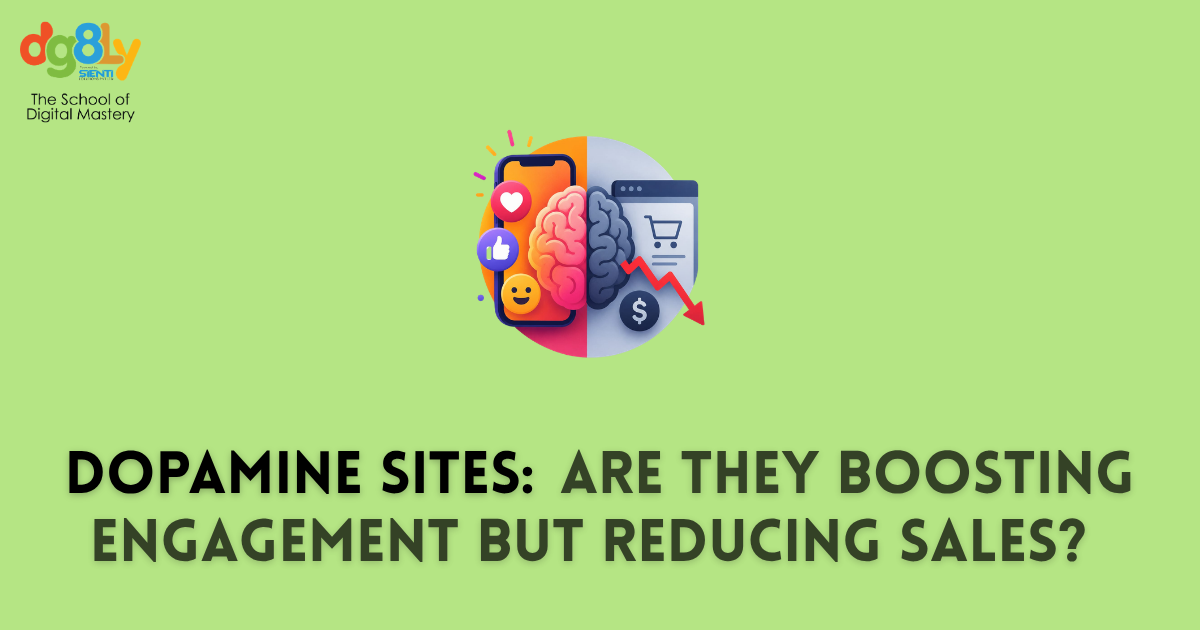
Dopamine Sites: Are They Boosting Engagement but Reducing Sales?
Have you ever spent 30 minutes browsing an online store, added products to your cart, saved a few items to your wishlist, and then left without buying anything?
You're not alone.
Modern websites are becoming experts at capturing our attention. Through endless scrolling, personalized recommendations, interactive product galleries, wishlists, and gamified experiences, many platforms keep users engaged for longer than ever before. These experiences trigger the brain's reward system, often referred to as a dopamine response. But here's the question businesses should be asking:
Are these dopamine-driven experiences increasing engagement while actually hurting conversions?
What Are Dopamine Sites?
"Dopamine sites" isn't an official technical term, but it's commonly used to describe websites and apps designed to keep users engaged by creating a sense of excitement, curiosity, and anticipation.
These sites often include:
Infinite scrolling
Personalized product recommendations
Flash sales and countdown timers
Interactive quizzes
Wishlists and saved collections
Gamified rewards
Short-form videos and product reels
Each interaction encourages users to continue exploring, creating small moments of satisfaction that keep them coming back.
Why Users Stay but Don't Buy
High engagement doesn't always translate into high sales.
Many visitors enjoy browsing products, comparing options, and imagining ownership without making a purchase. Saving items to a wishlist or filling a shopping cart can provide a feeling of progress, even if the checkout never happens.
This behavior is influenced by several factors, including:
Decision fatigue from too many choices.
Price comparison across multiple websites.
Fear of making the wrong purchase.
Waiting for discounts or offers.
Enjoying the browsing experience more than the buying process.
For some users, the emotional reward comes from exploring and not necessarily from completing the purchase.
The Hidden Risk of Chasing Engagement
Businesses often celebrate metrics like:
Longer session duration
More page views
Higher scroll depth
Increased app usage
While these are valuable indicators of user interest, they don't automatically mean your website is generating revenue.
A website can have excellent engagement metrics while still suffering from:
High cart abandonment
Low conversion rates
Poor checkout completion
Weak return on ad spend (ROAS)
If users are entertained but not persuaded, engagement alone won't grow your business.
Finding the Right Balance
The goal isn't to eliminate engaging experiences:it's to guide users toward meaningful action.
Businesses can improve conversions by:
Keeping product pages simple and informative.
Using clear, benefit-focused copy.
Displaying customer reviews and trust signals.
Reducing unnecessary checkout steps.
Offering compelling but genuine incentives.
Using strong, action-oriented calls to action.
Ensuring fast-loading pages and mobile-friendly design.
Engagement should support the buying journey, not distract from it.
What This Means for Digital Marketers
For marketers, it's important to measure success using both engagement and conversion metrics.
Instead of focusing only on clicks and time spent on site, also monitor:
Conversion rate
Add-to-cart rate
Checkout completion
Customer acquisition cost (CAC)
Return on ad spend (ROAS)
Customer lifetime value (CLV)
These metrics provide a clearer picture of whether engagement is actually leading to business growth.
Conclusion
Dopamine-driven website experiences can be incredibly effective at attracting attention and increasing user engagement, but engagement alone doesn't guarantee business success. The ultimate goal isn't just to keep visitors scrolling,it's to help them make informed decisions and confidently complete a purchase.
Businesses that strike the right balance between engaging experiences, persuasive copy, trust-building elements, and a seamless checkout process are far more likely to turn visitors into loyal customers. For marketers, understanding the psychology behind user behavior is essential for creating strategies that improve both engagement and conversions. If you're looking to master these concepts and stay ahead in the evolving world of digital marketing, enrolling in the best digital marketing course in Kochi can help you gain practical skills in consumer psychology, SEO, Meta Ads, conversion optimization, and AI-powered marketing strategies.

